
Tackling malnutrition among isolated older adults through collaborative research and co-design: Interview with Dr Zoe Lim, Research Fellow
21 January 2026
Rather than designing solutions in isolation, the project brings isolated older adults into the research process as valued stakeholders to develop a nutrition intervention that is grounded in their real-world circumstances and preferences.
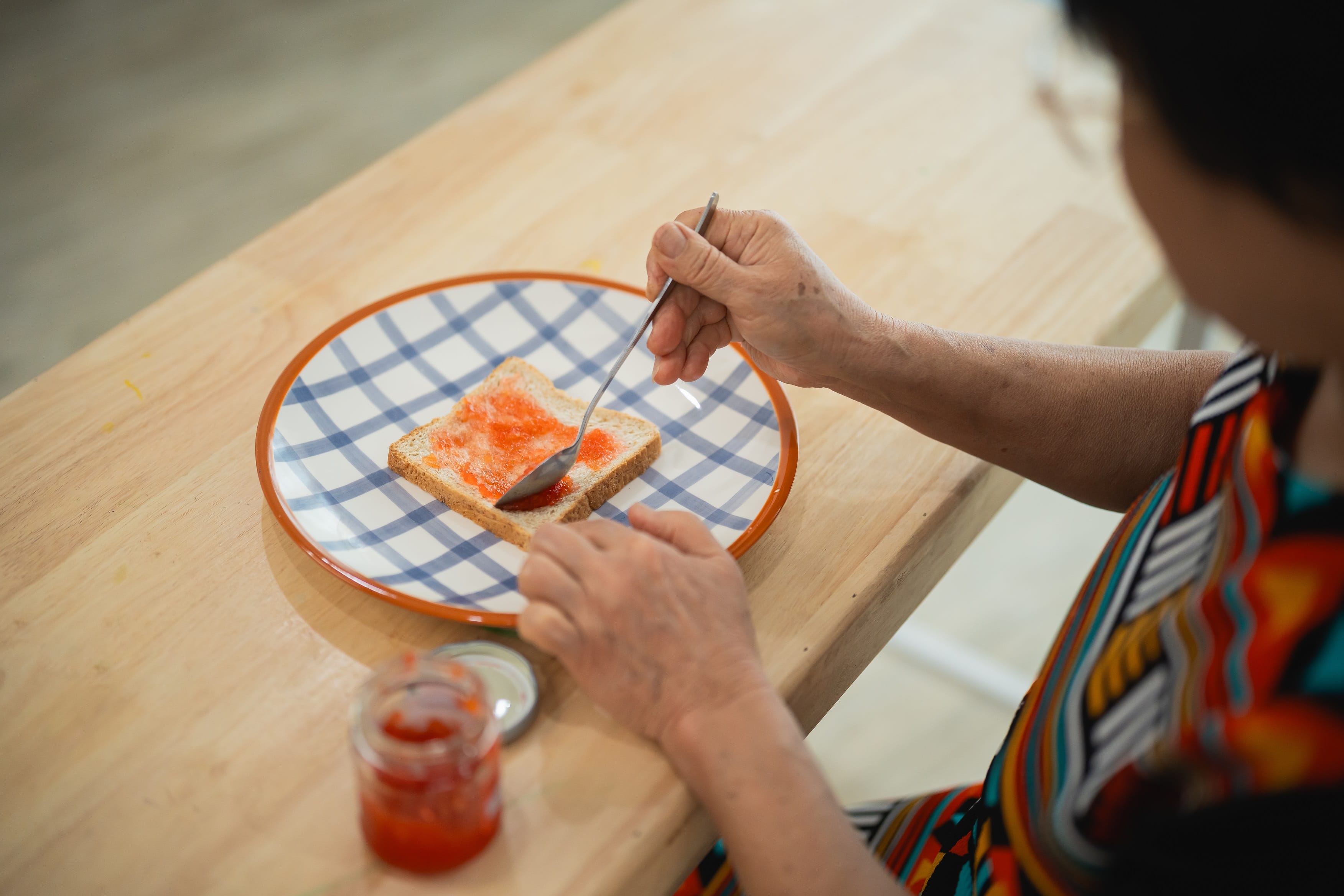
With Singapore’s population of older adults living alone more than doubling in the past decade, many face heightened risks of malnutrition that existing community programmes struggle to address. Initiatives like cooking classes and communal dining often reach those who are already socially active, leaving a significant gap for those who are more isolated.
GERI’s POPEYE (POwer my Plate with divErsitY and tastE) project takes a different approach—using community-based participatory research (CBPR) to work directly with isolated older adults and understand their lived experiences, with the ultimate goal of improving their nutrition. In collaboration with community partners like NTUC Health, the team has been conducting interviews and dietary assessments with older adults who are socially isolated.
We speak to Dr Zoe Lim, Research Fellow at GERI and the Principal Investigator of the study team, about her fieldwork insights, the challenges of reaching isolated older people in Singapore, and why doing research “with” rather than “on” communities matters.
GERI: Could you describe how you go about your fieldwork and what you are discovering about their daily eating habits? What has surprised you most about what you’ve observed so far?
We conducted two interviews with every older adult. The first visit took place at their homes, where we assessed their diet quality and had in-depth conversations about their dietary habits. The second visit involved doing diet-related activities with them, which might involve eating out, shopping for groceries, or cooking at home. They also sent us photos of their meals when possible.
Older adults usually face many challenges to eating well, including chewing difficulty, poor appetite, chronic digestive issues, and limited life-space mobility that inhibits access to healthy options. Most of these issues have been reported in the literature, so they are not “surprising” as such. However, putting all the issues together and seeing the relationships between different issues makes the lived experience “real” and palpable.
For example, living with chewing difficulty means standing in front of an economic rice stall, undecided about what dish to order because one must observe really carefully whether the meat is tender enough, or the vegetables are chopped fine enough, whilst worrying about the hawkers being unhappy with their hesitancy.— Dr Zoe Lim
.jpg)
Eating well takes a significant effort for everyone—especially for older adults who experience many biopsychosocial barriers in doing so.
Beyond these challenges, two things have been particularly surprising to me: the discrepancies between what people say they eat and what they actually eat, as well as the extent of nutritional misinformation. These issues are not unique to older adults. However, older adults with less social interaction have fewer opportunities to correct them.
How are you identifying and building trust with this hard-to-reach population? What are some challenges you have faced when engaging these older adults who are often socially isolated?
Our community partners did significant engagement work before we met the older adults. Their efforts were truly invaluable—without them, many would not have agreed to participate in this study. Even so, we still encountered a lack of trust, especially during first visits. That is why we planned for two visits—to allow time for trust and relationship building.
In some cases, we spent the entire first visit just listening to the older adults without gathering any diet-related data. All our researchers are trained to listen, engage, and apply a trauma-informed approach. This is essential when working with vulnerable older adults who might have been psychologically wounded from being silenced, disrespected, or excluded by important people in their lives. Showing care and respect is crucial to not only gain trust, but more importantly, to avoid re-traumatising them by demanding data when they are not ready. I believe these are basic ethics that researchers should uphold.
Usually, the older adults could sense our genuine intention to help, and by the second visit, most welcomed us with open arms. We also paid special attention to matching researchers with older adults from similar cultural backgrounds and who spoke the same language. Our multi-lingual team could communicate in all the local languages and dialects without needing translators, which helped build rapport and trust.
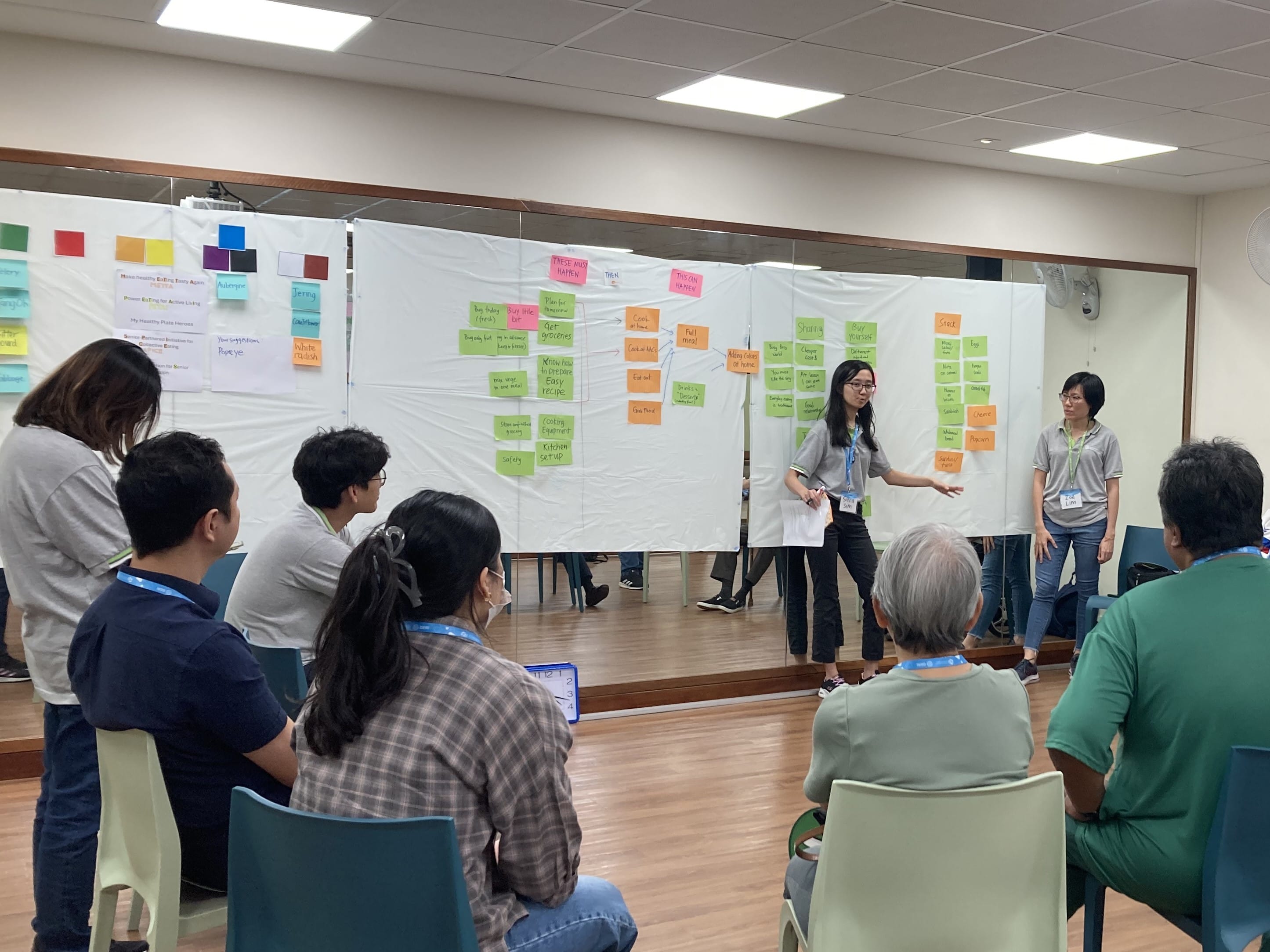
The POPEYE study team in a co-design session with stakeholders.
Looking ahead to the co-design intervention phase, how will these insights inform your approach to developing an intervention with your stakeholders? How do you envision this co-designed intervention improving both short-term diet quality and long-term health outcomes for isolated seniors?
Diet quality is what we call a “messy” problem because it involves complex interactions with different issues and stakeholders. Our findings on older adults’ needs, preferences, and strengths form the most important part of developing solutions, but not the only part. We also need to consider the characteristics and perspectives of relevant stakeholders, as well as factors in the food environments (i.e., the places where people buy, prepare, and eat food) that affect dietary behaviours. Together, we call these many parts and their interrelationships a “system”.
To make an intervention sustainable, we need to apply systems thinking. Otherwise, it is easy to over-fixate—a common mistake—on one solution that looks logical but ultimately misses the point. Currently, we are mapping the system based on inputs from seniors and various stakeholders, before identifying leverage point(s) in the system for intervention.
This process is called “co-design” where the “co” refers to researchers working together with those whose lives or work will be affected by the intervention. This is different from the conventional approach where researchers determine the best intervention on their own. By co-designing, we hope to foster better ownership of the intervention, which should translate to smoother implementation and better chances for behavioural change.
Diet change is very challenging, so we can only do our best. But I think it is already good news if we can create a positive shift that builds momentum and leads to further improvements. All small shifts count, and in the long run, one small shift for individuals can translate to significant population-level effects.— Dr Zoe Lim
.jpg)
The CBPR approach emphasises that research is conducted “with” the people rather than “on” them. What drives your interest in CBPR, and why does it matter for addressing health challenges among older adults?
I think the fundamental question in doing any applied research is “so what?”. Many years ago, I thought I had cracked an important problem, only to be told that my research would become just “another book sitting on the shelf”. I knew it was because people who were supposed to implement the solution were only given tokenistic participation in the project, whilst researchers made the decision for them. Since then, this mental image of a useless book has become an ethical inspector for how I should conduct research.
CBPR’s central tenet of co-ownership is, therefore, very attractive to me. It is also very challenging because others may want to head in a different direction than mine, and I must roll with that. My mentor, Professor May Wang (Senior faculty member at the UCLA Fielding School of Public Health, and Adjunct Scientist at GERI), said CBPR researchers are like “ushers”, where we can only invite and not dictate. I love the challenge of this humbling role. It requires letting go of control, grounding myself in my value system, and trusting the process. It is both daunting and exciting!
There is substantial literature demonstrating the effectiveness of CBPR in addressing health challenges, especially in disadvantaged communities. While I cannot yet make the same claim until our project reaches that stage, based on our co-design sessions so far, we have observed a messy but potentially generative process of collective reflection and action. This process might ignite something new that would otherwise be unachievable through a researcher-led, linear way of doing research.
Read more about the POPEYE project here.
For news coverage featuring the project, click here.