
GERI at the Singapore Conference on Ageing and Health 2026
11 February 2026
Our researchers presented latest findings from projects where GERI is leading and partnering on implementation research for our health system and community.
The Singapore Conference on Ageing and Health 2026, organised by the Duke-NUS Centre for Ageing Research & Education, saw 11 of our researchers showcase GERI’s collaborative approach to implementation research on healthy ageing. The 8 projects featured gave conference-goers a glimpse into GERI’s breadth of work with healthcare institutions and community partners in driving evidence-based interventions that support older adults’ function and help them age-in-place.
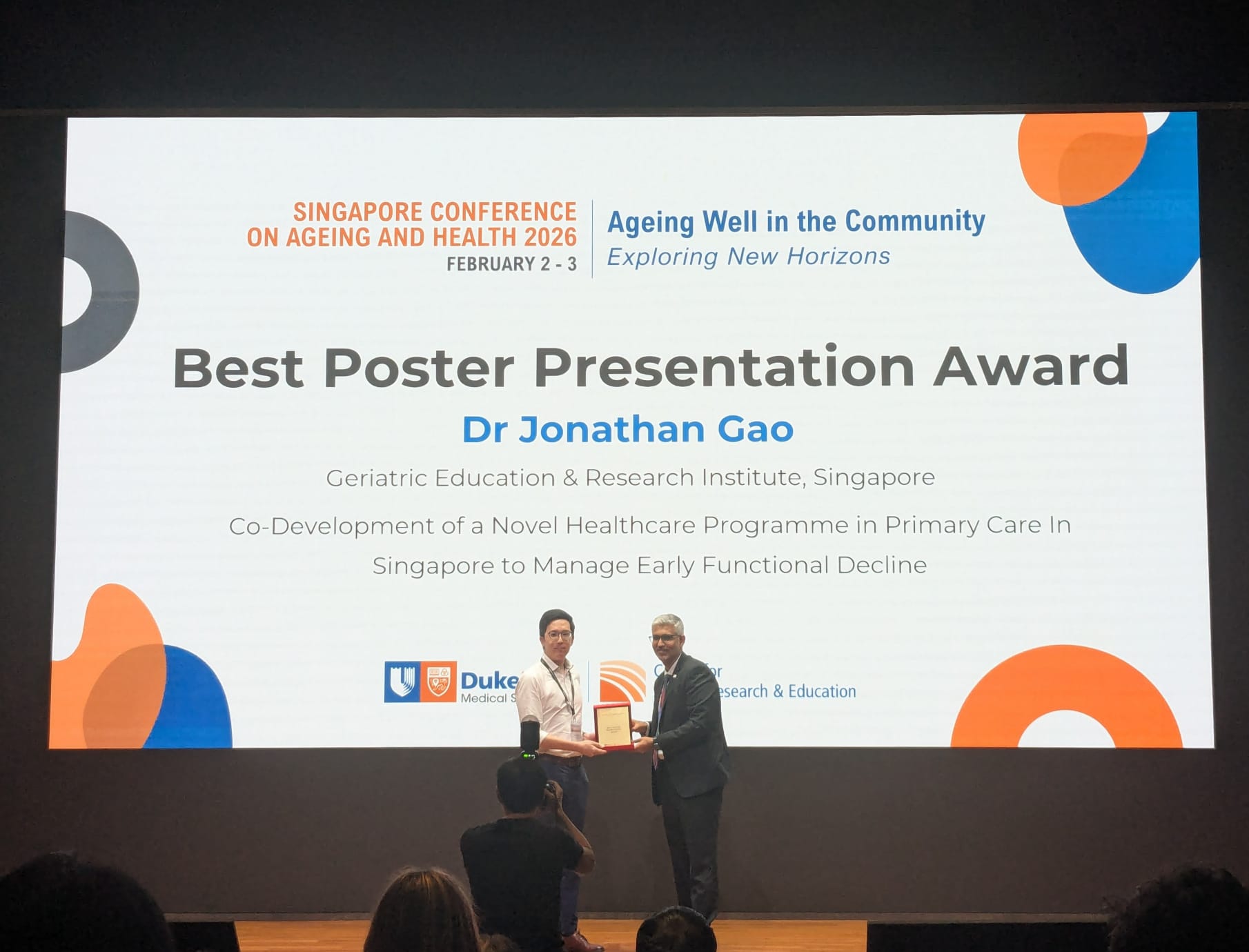
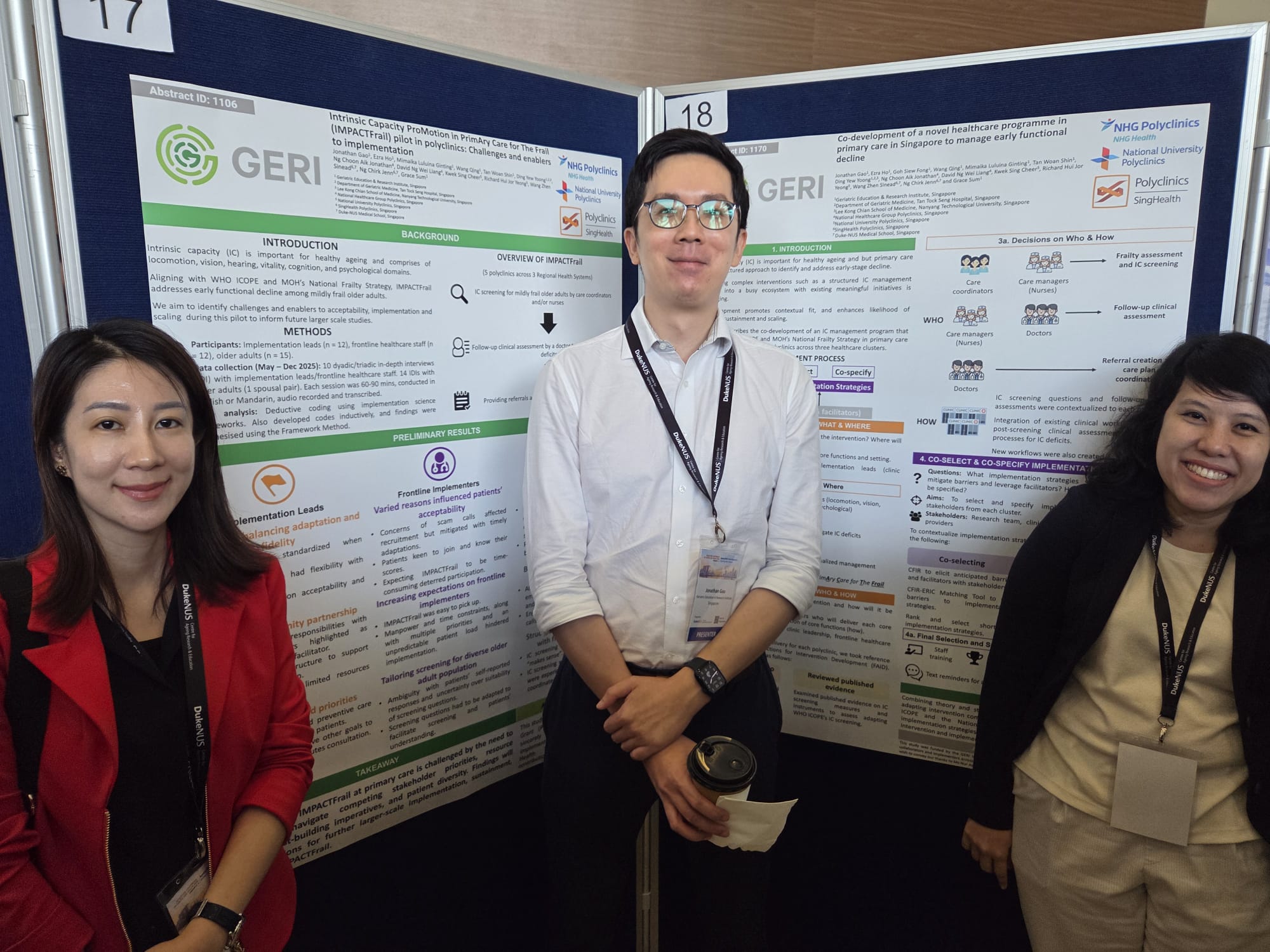
Dr Jonathan Gao, Research Fellow (pictured above) clinched the Best Poster Presentation award for his work on the co-development of the IMPACTFrail programme to manage early functional decline. His poster demonstrated how co-developing the intervention with healthcare stakeholders – such as clinic leadership and frontline healthcare staff – can successfully adapt the World Health Organization’s Integrated Care of Older Persons (ICOPE) framework for local primary care. This has enabled the contextualised implementation and integration of IMPACTFrail at five polyclinics across the three Regional Health Systems.
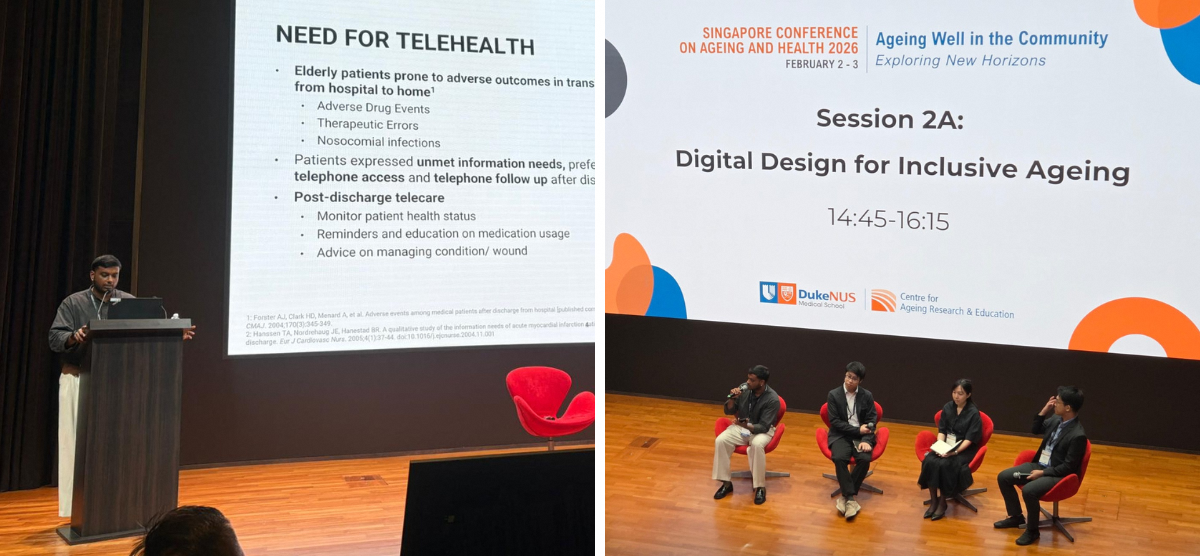
Pirratheep Moorthy, former Research Officer (pictured above) highlighted gaps in telehealth services for older adults identified through the THINK study. The study team found that older and younger adults achieved identical functional outcomes from telehealth services. Yet, older adults were significantly less satisfied and less likely to continue using telehealth, having had to work harder to overcome language and technological barriers. Speaking at an ensuing panel discussion, he called for age-specific strategies to ensure equitable telehealth access for older adults.
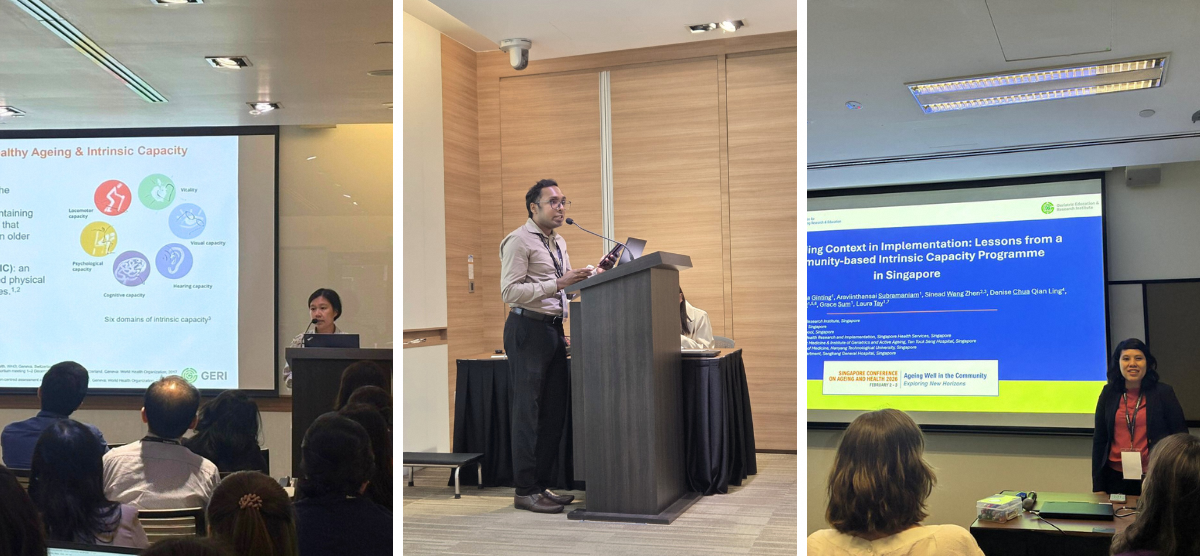
From left to right: Wang Qing Irene, Araviinthansai Subramaniam and Dr Mimaika Ginting
Wang Qing Irene, Research Associate presented on evaluating IMPACTFrail’s implementation strategy. Findings indicate that implementation strategies, when delivered with high quality, are critical to making complex healthy ageing programmes feasible, sustainable and scalable in primary care. Assessing this helps identify what works on the ground and supports wider adoption.
Araviinthansai Subramaniam, Research Associate discussed the implementation of the Inpatient Nursing Frailty Assessment programme at Tan Tock Seng Hospital, which aims to empower nurses in non-geriatric wards to systematically identify and manage geriatric syndromes. As busy hospital settings can pose contextual constraints, targeted and well-planned implementation strategies are needed to promote efficient use of resources, address stakeholders’ competing priorities and cater to patient diversity.
Dr Mimaika Luluina Ginting, Research Associate presented on INFINITY-ICOPE, an integrated frailty and intrinsic capacity programme led by Sengkang General Hospital. As implementation is dynamic, there is a need for systematically developed, context-responsive implementation strategies, paired with ongoing monitoring of effectiveness and quality. This enables real-time learning, adaptive improvement and stronger programme delivery.
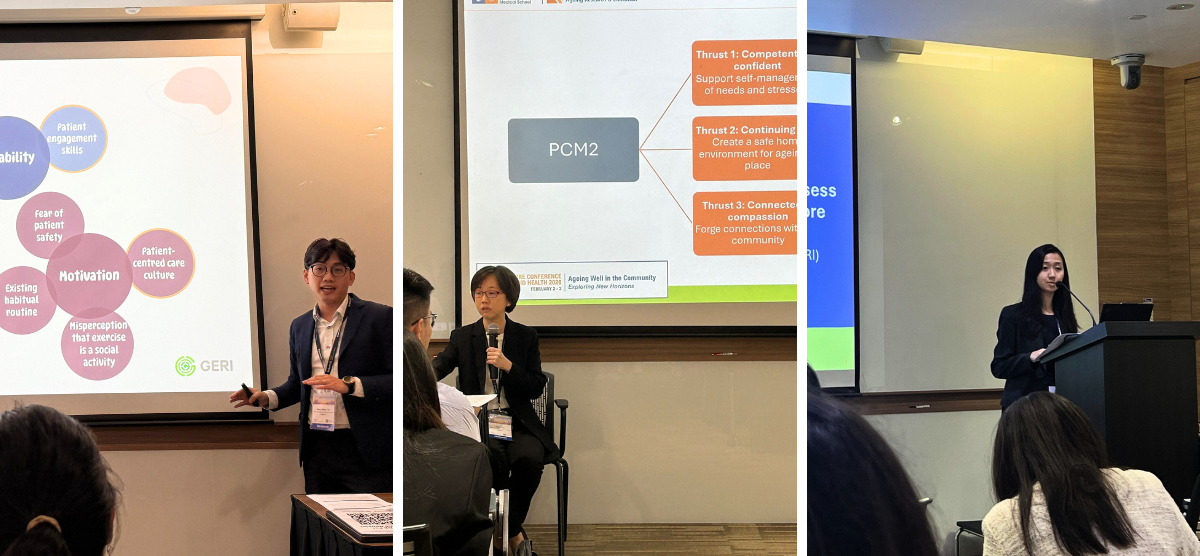
From left to right: Dr Tou Nien Xiang, June Teng and Silvia Sim
Dr Tou Nien Xiang, Research Fellow chaired the conference session on interventions for older adults with cognitive impairment. He shared insights from his ongoing study with Dementia Singapore on implementing resistance training in community dementia care. Despite strong evidence for resistance training benefits, real-world implementation in community settings remains limited. Using the COM-B model, Dr Tou highlighted key determinants and how exercise interventions can be designed with implementation in mind.
Dr June Teng, Research Fellow presented on a feasibility study for the Caregiver Strength Circle (CSC), a peer support programme for family caregivers implemented by Allkin Singapore in collaboration with Tan Tock Seng Hospital. Part of Project Carer Matters 2, CSC was well-received by the caregivers, who benefitted from the sharing of experiences and mutual support received. The study identified positive rapport among the caregivers, peer leaders and staff as crucial for implementation success.
Silvia Sim, Research Associate presented preliminary findings from the POPEYE study conducted in collaboration with NTUC Health and other stakeholders, which aims to improve intervention equity by shedding light on older adults living alone with social risk factors for malnutrition. The needs assessment revealed poor diet quality and insufficient intake of healthy foods due to complex reasons, including functional challenges, health misconceptions and a limited diversity of suitable healthy options in the food environment when eating alone.
Other scientific posters from GERI were also featured at the conference:
Dr Jonathan Gao: “Intrinsic Capacity ProMotion in PrimAry Care for The Frail (IMPACTFrail) pilot in polyclinics: Challenges and enablers”
Dr Serene Nai, Research Fellow: “Effects of hearing loss on social connectedness, mental and cognitive health amongst older adults: A mediation analysis”
Dr Zoe Lim, Research Fellow: “Offering Choices for Participation: Qualitative Methodological Considerations with Socially Isolated Older Adults"
Tang Jia Ying, Research Officer: “Evaluating the implementation quality of implementation strategies for a pilot nurse-led frailty management programme”
Follow GERI on LinkedIn for the latest updates.